
Pastoral support
What is Pastoral support?
Pastoral support refers to the care and guidance that schools put in place to look after students’ social, emotional, and mental wellbeing. Pastoral care ensures that pupils are emotionally healthy, feel safe, and are socially connected. It works alongside an academic focus to support the whole child.
This support can include anything from anti-bullying initiatives and mental health services to mentoring programmes and positive behaviour interventions. In essence, pastoral care builds a bridge between students’ personal challenges and their ability to succeed in school.
Every three minutes, a child in England is referred to mental health services—that’s more than 500 children each day. These figures highlight an urgent reality: students are facing increasing emotional and psychological pressures that go far beyond the classroom. As a result, schools are increasingly readjusting their role, not just as places of learning but as vital support systems for young people. Pastoral support lies at the heart of this shift. More than a set of services, we see a commitment to ensuring every child feels safe, valued, and equipped to face challenges—academically, socially, and emotionally.
Why is pastoral support important?
In 2023–24, NHS referrals for children’s anxiety in England more than doubled compared to pre-pandemic levels, with over 204,000 children aged 17 or under referred due to anxiety—up from 98,953 in 2019–20. This surge equates to nearly 4,000 referrals per week, underscoring a significant mental health crisis among the youth.
The rise in anxiety, depression, and other mental health concerns among children and young people has put pastoral support in the spotlight.
Here are a few key reasons why pastoral support matters:
- It supports mental health - Pastoral services offer a safety net for students who may be struggling silently. Whether it’s through mentoring, emotional check-ins, or group support, these systems can make the difference between a student thriving or becoming overwhelmed.
- It improves behaviour and attendance - Students who feel cared for and respected are more likely to engage with school. Pastoral care can reduce exclusion rates, improve punctuality, and increase overall attendance.
- It boosts academic performance - When young people are mentally and emotionally supported, they’re in a better position to focus, learn, and thrive. Pastoral care removes barriers to learning that may otherwise hold them back.
- It creates a safer, more inclusive environment - Pastoral support encourages diversity, inclusion, and mutual respect. It ensures vulnerable students or those with additional needs don’t fall behind in their education.
- It helps with life skills - Pastoral programmes often include sessions on resilience, self-regulation, empathy, and communication; skills that serve students far beyond the classroom.
Mental Health and Wellbeing
At Ashcombe, we strive to actively promote positive emotional health and well-being throughout the school. Within our school ethos, we promote a safe and open culture where children can talk about their feelings and experiences and learn in a fail-safe environment. Our talk buddy system works successfully and staff are quick to pick up on children who may need additional emotional support. We understand that at times, pupils and their parents/carers may experience issues affecting their emotional health such as anxiety, stress, depression, bereavement and loss, eating disorders and self-harm. All members of our team have had Mental Health training and have access to a wide of support groups which may be of benefit to you and your family.
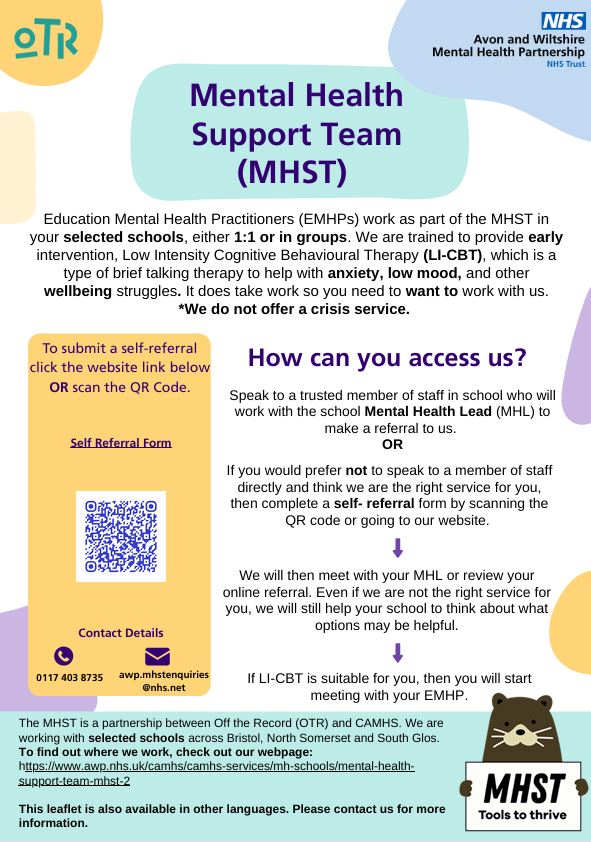
Mental Health Support Team (MHST)
Ashcombe Primary School is supported by the Mental Health Support Team (MHST), a partnership between Off the Record (OTR) and CAMHS. The MHST works with schools to promote positive mental health and wellbeing, providing support for pupils experiencing anxiety, low mood, and other wellbeing challenges. Education Mental Health Practitioners (EMHPs) can offer early intervention support through one-to-one sessions or small group work, as well as helping schools develop a whole-school approach to mental health and wellbeing.
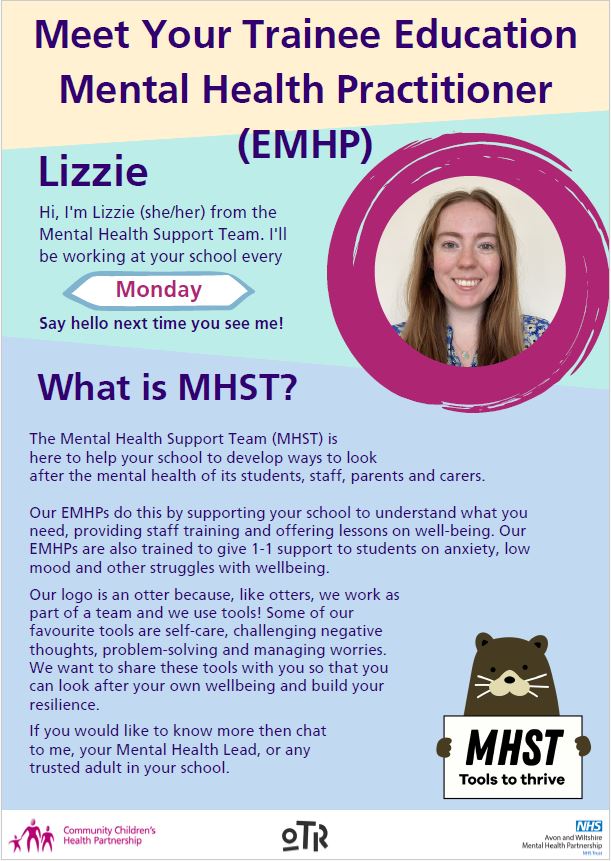
Our allocated Trainee Education Mental Health Practitioner is Lizzie, who works in school on Mondays. Pupils, parents and carers can access support through a referral from the school's Mental Health Lead or by completing the MHST self-referral form if appropriate.
What is a Learning Mentor and what do they do?
A Learning Mentor supports children to help remove any barriers they may be experiencing which affects their learning. A Learning Mentor can also support children’s parents and carers with any issues that are affecting the family’s home life or in supporting their children.They can provide 1:1 sessions or group sessions of support. They work with children for different reasons and the help that is offered depends on the needs of the child. They support families with concerns and issues around their child.
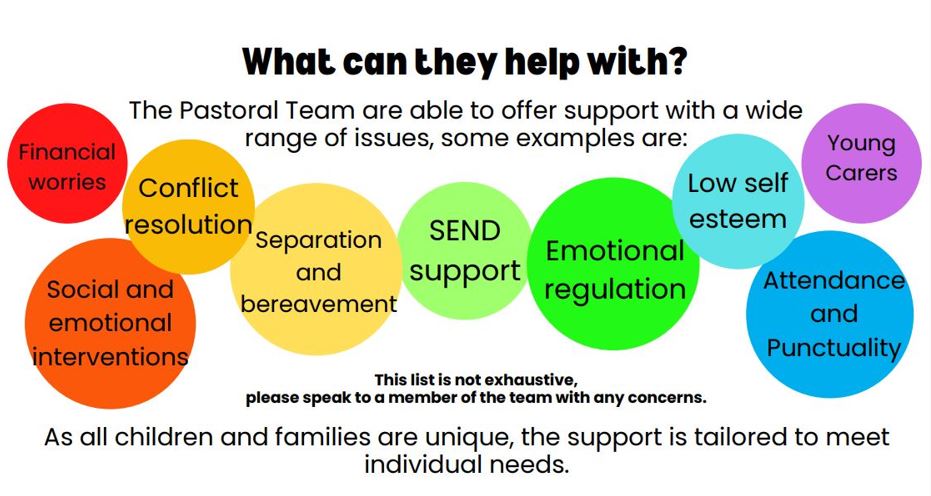
Some of the support offered to children includes:
- Staying safe
- Managing Feelings
- Anger Management
- Anxiety
- Worries
- Attachment
- Emotional Literacy
- Bereavement & Loss
- Bullying
- Behaviour
- Eating disorders
- Self-Esteem
- Confidence
- Self-Harm
- Friendship issues
- Mental Health
- Domestic abuse and the impact on the child
The Learning Mentor is able to refer and signpost to different services for more specialised support if requested.
- Early Help
- School nurse
- Children’s behaviour
- Attendance
- Finance and welfare
- Parenting
- Alcohol and drug use
- Domestic abuse
- Anxiety and depression
- Any issues or concerns that are affecting family life
Meet our pastoral team


| Chantelle Thompson, Pastoral Lead & Deputy DSL | Karen Selway, Learning mentor & parent support advisor | Lorraine Francis, Learning mentor & parent support advisor | Christina Young, SEMH learning mentor & intervention worker |
For more information or to speak to a learning mentor please call the school on: 01934 620141
Useful Links
Mental Health Support
Mental Health Support Team (MHST) - Schools play an important role in supporting the wellbeing of children and young people at a time when they are experiencing lots of physical, emotional and social changes. Nationally, the introduction of Mental Health Support Teams (MHSTs) working within schools to provide an additional source of support to young people and their families.
Click here to visit the MHST website
Please find the link below to enable you to book onto the MHST webinars for parents around mental
health, should you wish.
Click here to visit AWP Mental Health Support Teams in Schools website
OTR North Somerset - OTR is a mental health and social movement by and for young people aged 11-25 in North Somerset. Getting free wellbeing info support couldn’t be easier – explore this website and sign-up directly to the project or service you want to try.
Click here to visit the OTR website
Sirona Care & Health - Advice and signposting for children's health concerns
Click here to visit the Sirona children and young person services website
Beat - Beat is the UK’s leading supporting those affected by eating disorders and campaigning on their behalf. Helpline 0808 801 0677 is open 365 days a year.
Click here to visit the Beat website
Bullying
National Bullying Helpline - Practical help and advice for children and adults dealing with bullying at school or work. National Bullying Helpline 0845 22 55 787
Click here to visit the National Bullying Helpline website
Bullying: Young Minds - Young Minds Parents Helpline is available to offer advice to parents/carers worried about a child or young person under 25. Call FREE on 0808 802 5544 from Mon-Fri 9:30am – 4pm
Click here to visit the Young Minds website
Bullying & Cyberbullying: NSPCC - Advice for parents/carers to help keep children safe from bullying wherever it happens. Call on 0808 800 5000 or email help@nspcc.org.uk
Click here to visit the NSPCC website
Bereavement
Bereavement UK - A valuable hub providing bereavement support and information for families.
Click here to visit the Bereavement UK website
Child Bereavement UK - Child Bereavement UK supports families and educates professionals when a baby or child of any age dies or is dying, or when a child is facing bereavement. National Helpline 0800 02 888 40 or Live Chat via the website or email at support@childbereavementuk.org
Click here to visit the Child Bereavement UK website
Cruse Bereavement Support - Cruse Bereavement Support exists to promote the well-being of bereaved people and to enable anyone bereaved by death to understand their grief and cope with their loss. Services are FREE to bereaved people. The charity provides support and offers information, advice, education and training services. National Helpline: 0808 808 1677
Click here to visit the Cruse Bereavement Support website
General Support
North Somerset Council Parenting & Family Support - This website provides various information and resources available to support families living in North Somerset.
Click here to visit the North Somerset Council parenting & family support website
North Somerset Council Children, young people & families - This website provides various information for families living in North Somerset.
Click here to visit the North Somerset Council children, young people & families website
North Somerset Family Hubs - North Somerset Family Hubs provide useful services for both you and your family within your community. Primarily aimed at parents/carers with children aged under five years but can support the whole family
Click here to visit the North Somerset Family Hubs website
Childline - A counselling service for children and young people up to their 19th birthday in the UK, provided by the NSPCC. Tel: 0800 1111 (free)
Click here to visit the Childline website
Finance
Family Fund - This is a UK based registered charity for disabled children and their families. It is the UK’s largest charity providing grants for families raising disabled or seriously ill children and young people. Call on 01904 550055.
Click here to visit the Family Fund website
North Somerset Council, Benefits & Support - This website provides information on benefits and financial support available in North Somerset.
Click here to visit the North Somerset Council benefits & support website