
SATs
 KS2 Assessments (SATs)
In Year 6, children take part in the national Key Stage 2 assessments, often known as SATs. These tests help teachers and schools understand how well pupils have learnt the key skills set out in the National Curriculum, particularly in reading, writing and maths. While they are an important part of your child’s learning journey, they are just one of many ways we assess progress. Our aim is to ensure every child feels prepared, supported and confident as they approach these assessments.
Guidance for parents and carers
Supporting your Year 6 child with the end of Key Stage 2 assessments
Helping your child at home 

Choose one or two activities that fit naturally into your routine. These work well as 5-10 minute bursts of practice - little and often is more effective than long sessions.
English
- Continue to read together with your child regularly. Talk about what you are reading - ask what they think about the story and why characters might have acted in certain ways. Notice together how writers use different punctuation marks and interesting words.
- Play word games together - board games like Scrabble and Boggle are great, but simple games like 'Word of the Day' work well too. Pick a new word each day and challenge each other to use it correctly in a sentence. Keep a list of tricky spellings on the fridge to practice.
- Practice spelling and punctuation in short, fun bursts. Write silly sentences together and check the punctuation. Play spelling tennis - take turns adding letters to make a word, but if you add a letter that can't make a real word, you lose!
- When reading together, hunt for different types of sentences. Can you find an exclamation, a question, a command, and a statement?
Mathematics
- Use the receipt from your shopping to ask questions e.g., what is the total cost of the fruit and vegetables? What change would I get from £50? While unpacking the shopping, guess the weight of items then weigh them.
- Use the Mental Maths app (see Toolbox section) to practise times tables daily. Can your child recall their facts instantly? Compete against themselves or others to improve their speed!
- Newspaper maths – use league tables or weather charts in newspapers or use online news sites, weather apps, or sports results to ask questions e.g., what is the difference between the temperature in London and Moscow? What is the mean (average) of the points scored in the Premier League?
Helping your child on the move 
Whether you are walking to school, on the bus or in the car, journeys offer perfect opportunities for quick learning games.
English
- Listen to song lyrics together and play with the words you hear. Can you find any words with prefixes or suffixes? Can you think of synonyms (words that mean the same thing) and then find their antonyms (words that mean the opposite)? Make it a fun back-and-forth game.
- Play the 'Describe It' game with things you spot while traveling. Choose something you can see and take turns describing it using different word types - first adjectives, then verbs, then adverbs. For example, a tree might be "tall and leafy" (adjectives), "swaying and rustling" (verbs).
- Create stories inspired by what you see on your journey. Take turns adding sentences, ensuring they each start differently ('Meanwhile', 'Although', 'After that', 'Suddenly', 'Later').
- Turn signs and notices into a fact and opinion game. For example, "This is England's oldest castle" (fact) vs "This is England's most exciting castle" (opinion). Take turns turning facts into opinions and opinions into facts.
- Play with word families while you travel. Choose a word you see and build its family - like 'care' could become 'careful', 'caring', 'careless', 'cared'. Who can think of the most related words?
Mathematics
- Number plates – Look at the numbers on number plates and create questions based on them e.g., subtract the number from 1000 or multiply/divide the number by 10/100 or 1000.
- Sequences – Choose a starting number and a rule. Take it in turns to say the next number in the sequence e.g., start with 19 and add/subtract 8. How far can you take the sequence before an error is made? Try decimals too.
- Odd one out – Give your child four numbers and ask them which is the odd one out and why e.g., 12, 19, 18 and 21. 19 is the odd one out because it is the only prime number.
Helping your child when out and about
Turn everyday trips and visits into learning opportunities with these simple activities.
English
- Play the 'Amazing Adjectives' game when you're visiting places. Instead of using common words like 'big' or 'nice', challenge each other to think of more interesting adjectives to describe what you see. For example, a 'towering' tree or a 'dangerous' skating ramp.
- Practice speaking in full, clear sentences by playing ‘Tour Guide’. Take turns being the guide and describing what you can see using Standard English - like you're presenting to a group of visitors. Remember to avoid using slang or informal language.
- Select an object at the place and take it in turns to see how many antonyms or synonyms you can think of for the word e.g., an antonym of steep is gentle; a synonym could be sheer.
- Be word detectives when reading information boards or leaflets. Look for formal language (like 'commenced' instead of 'started') and try changing formal sentences into informal ones, or vice versa.
Mathematics
- How long? Select a starting and finishing point in the place. Estimate how many seconds/minutes it would take to walk the distance, then time it. What is the difference between the two times? Who was the closest?
- I-spy – Play the game by describing the properties of a shape which can be seen e.g., I-spy a quadrilateral with only one pair of parallel lines (a trapezium).
- How much? Look at prices in shop windows or on supermarket shelves. How much would 4 of that item cost? What if there is a “3 for 2” offer? You can also use entrance fees or menu prices if you're visiting somewhere - what would it cost for your whole family?
Supporting your child’s wellbeing
- Encourage your child to take plenty of exercise. Why not go out for a walk together after your evening meal? What about a bike ride at the weekend?
- Breakfast is the most important meal of the day. Why not create some healthy breakfast menus together? Or try some of the healthy smoothie recipes from the ‘Power to Perform’ booklet?
- Device-free time – why not challenge your child to spend an hour each evening away from screens and electronic devices? What about playing a board game instead or going outside to play?
- Try to make sure your child has a regular routine for going to bed and getting up so that they have between 9 and 10 hours of sleep each night (approximately).
- If they are learning at home, a quiet place away from distractions is ideal. Try to encourage them to take the ‘little and often’ approach and take regular breaks.
Encourage your child to share with you their feelings as they begin the final term of primary school. Help them to understand that experiencing a mixture of feelings – excitement, nervousness, optimism, worry – is completely normal.
Parents’ Toolbox
The resources below can be used to support your child in preparing for the tests and ensuring they have the right knowledge and skills to make a good start at secondary.
Games
- Taboo
- Pictionary
- Boggle
- Scrabble
- Articulate
- Monopoly
Useful websites: English
- https://www.bbc.co.uk/bitesize/subjects/zv48q6f/year/zncsscw
- https://www.oxfordowl.co.uk/for-home/advice-for-parents
Useful websites: Mathematics
What are the end of Key Stage 2 tests?
Children in Year 6 will be taking the Key Stage 2 tests in May 2026. They provide information about how your child is progressing and how they compare to children of the same age nationally. They provide a ‘snapshot’ of your child’s learning, progress and attainment at the end of KS2. These tests are both set and marked externally.
The tests are not qualifications and don’t affect your child’s future options in school. However, they do help to develop key skills which provide an important foundation for secondary school.
When do the end of Key Stage 2 tests take place?
|
Date |
Paper |
Duration |
|
Monday 11th May 2026 |
English Grammar, Punctuation and Spelling (GPS) Papers 1 and 2 |
45 minutes (GPS) Approx. 20 minutes (Spelling) |
|
Tuesday 12th May 2026 |
English Reading |
60 minutes |
|
Wednesday 13th May 2026 |
Mathematics Paper 1 (Arithmetic) Mathematics Paper 2 (Reasoning) |
30 minutes (Paper 1) 40 minutes (Paper 2) |
|
Thursday 14th May 2026 |
Mathematics Paper 3: Reasoning |
40 minutes |
During SATs week, there will be a free SATs breakfast offered to all year 6 children on the morning of SATs. Details sent out to parents/carers near the SATs week.
More support:.
Please see attached holiday challenge document for support with SPAG :
Youtube video links for support for Maths:
BODMAS: click here to watch the video in new window
Adding and subtracting fractions with different denominators: click here to watch the video in new window
Multiplying fractions: click here to watch the video
Adding and subtracting fractions with whole numbers: click here to watch the video in new window
Divide fractions: click here to watch the video
Multiplying decimals: click here to watch the video in new window
What is involved in the tests?
|
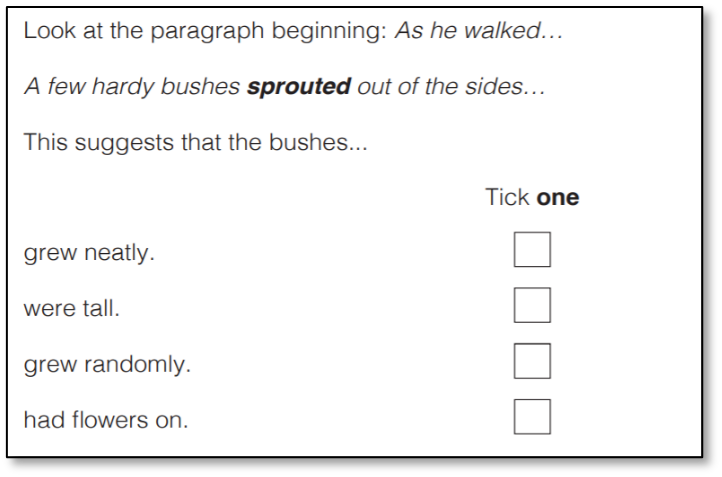
The Reading Test
|
|
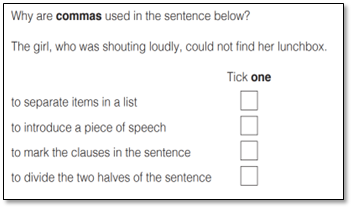
The Grammar, Punctuation and Spelling (GPS) Test
|
|
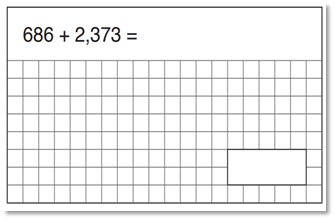
The Maths Arithmetic Test
|
|
The Maths Reasoning Tests
|
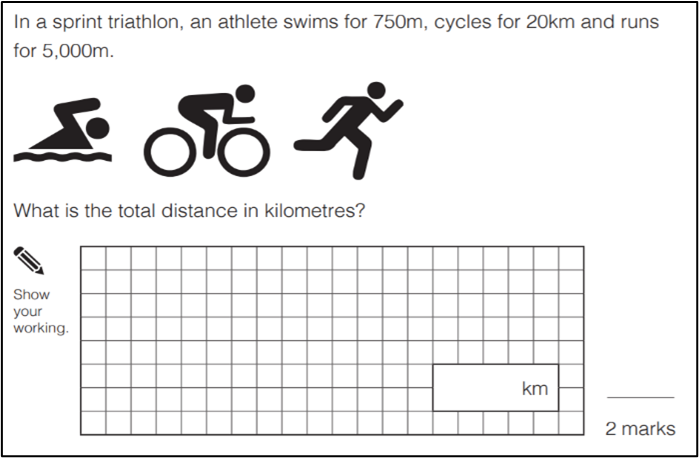
Please note that there is no writing test – this is assessed by your child’s teacher.
Final thoughts
Remember, you don't need to do everything in this guide - pick one or two activities that work for your family and build them into your routine. Little and often is far more effective than trying to do too much.
Most importantly, help your child feel confident and supported. Your encouragement means the world!
If you have any questions or concerns, please get in touch with us.