Curriculum
In recent years it has become increasingly apparent that social, environmental and technological shifts both locally and nationally have intensified to such an extent to influence us all that it is crucial that schools pro-actively focus on the content of their wider curriculum to provide children with essential, relevant knowledge. Our world is changing evermore rapidly and our school community, just like all other schools, need to keep pace with this change to ensure that our children grow up as informed adults with balanced opinions who understand the importance of self-respect, respect for others and balanced debate. We want to engender the ability to individually and co-operatively operate for the greater good of themselves, for others and our precious and increasingly fragile world.
Over recent years we have spent a lot of time and energy thinking about this as a school and creating the very best curriculum offer that we believe responds to the challenges of today and equips our children for all of our futures.
Our knowledge rich 3D curriculum
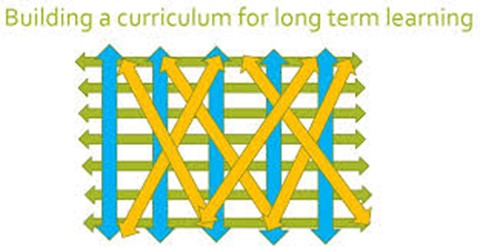 In response to the challenges we all face we have created a knowledge rich curriculum that promotes remembering and builds character. We want knowledge to feature at the heart of our curriculum. In the past, for many reasons, schools have been in danger of creating narrow curriculums with lessons disproportionately focussed on maths and English. This is no way to educate children to become informed citizens of the future. For this reason we have drawn on our wealth of collective educational experience and the best active-research based thinking to produce what we believe to be our very best curriculum. We call this our 3D Curriculum. At its core we have our most knowledge rich subjects of history, geography and science. We visualise our curriculum in three-dimensions because it has vertical themes with horizontal and diagonal links that encourage deeper, more connected learning.
We have created strong vertical themes of knowledge from Year 1  to Year 6, these are big ideas that we want our children to understand. Big ideas such as democracy, global warming and what it is to be human. Huge concepts that can, given the right pitch and nuance that considers child development, be taught to young children They will learn about them each year so that they become memorable, building on previous knowledge to allow their understanding to become deeper and more nuanced as they learn in different contexts or with new subject matter. This vertical approach to curriculum delivery has been adopted successfully for many years worldwide for the subjects of maths and English so it stands to reason that we should do so with our wider curriculum. An example of our implementation of this vertical theming is our geographical Local Area theme where each school year we provide our children with an ever-deepening knowledge of their locality and set it in an ever growing context of the South West as a region of the United Kingdom. Only by understanding our local area can our children engage with it, become a part of it and, the ultimate aim, contribute to it positively. As children’s knowledge of their local area grows their understanding grows deeper because from what we know from learning research ‘the more you know, the more you can know’. The knowledge within our vertical themes has been planned in granular detail by those who have the knowledge and experience to ensure that it is essential knowledge worth knowing. This essential knowledge has been planned with expertise, in granular detail by the dedicated, knowledgeable and expert few so that it can be delivered and received with greater ease by the many. In this way we have ensured that knowledge doesn’t become ‘light’, haphazard or left to chance which can happen when it has been planned in limited time by busy teachers with ever-growing demands on their time and thinking. We have ensured that teachers can be certain that they are delivering sequential essential knowledge of our world for our children that builds over time from one year to the next.
Within our 3D curriculum there are also horizontal links within year groups between and across themes. These are very much like the cross-curricular links that have been a tradition in schools for many years. These horizontal links again allow children’s understanding to deepen but this time across subjects rather than within subjects. This horizontal, cross-curricular approach, much favoured by schools over many years to deliver school curriculums has its place as a curriculum model for learning within our 3D curriculum but it doesn’t allow the much more beneficial curriculum delivery approach of sequential learning over time.
In 2018 Amanda Speilman head of OFSTED stated that ‘there was a dearth of understanding about the curriculum in some schools. Too many teachers and leaders have not been trained to think deeply about what they want their pupils to learn and how they are going to teach it.’ This statement, along with the huge changes in our world felt by all of us recently and what we now know about how children learn best was the catalyst for some fresh thinking and the beginning of our journey of curriculum re-design here at Ashcombe Primary School.
Building children’s schema
We believe that our three-dimensional curriculum gives our  children the very best opportunity to build relevant, positive and useful schema. Schema describes the way in which we organise our minds to categorise information and build and strengthen links between these different categories of information. Our minds build complex schema throughout our lives which become deep-seated and influential over our decision making and opinions. As we all know, young minds are highly responsive to new information and ideas, so it stands to reason that primary education and the knowledge it delivers is worthy. For this reason we take our role as primary educators very seriously. On your behalf and alongside you, we are tasked with sharing knowledge, information, values and ideas with your child to develop their schema and ultimately their characters, their lives and the lives of others, now and in the future.
How we promote remembering
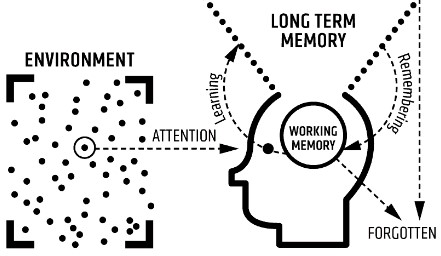 The most important thing to remember is how easy it is to forget things! Forgetting is a natural and necessary part of life. If our brains didn’t have the natural ability to forget we would quickly become overwhelmed with information and our brains wouldn’t allow our bodies to be able to carry out the necessary functions of everyday life. As educators this faces us with a dilemma; if we believe our curriculum is full of essential knowledge worth knowing and we know that forgetting is a natural human response, particularly for young children, how do we ensure children remember it? The way we have designed our 3D curriculum with its vertical themes goes a long way to helping children annually revisit big ideas. This spaced repetition helps to achieve better memory retention.
Furthermore, we draw on the theory of Ebbinghaus’ 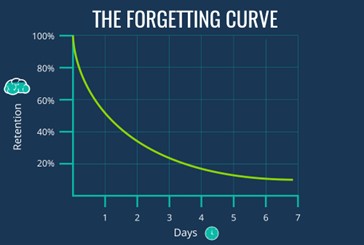 Forgetting Curve. In simple terms this theory explains how our memories go through an initial stage of memory decline within the first twenty four hours, followed by a slower rate of memory decay over the longer term. To combat the curve of forgetting Ebbinghaus suggests using active recall instead of passive review. Passive review is merely when learners simply reading information without actively trying to recall what they have read. Think back to how you may have revised at school by cramming. This is passive review – it probably got you through your exam at the time but much of the information was quickly forgotten and never became useful knowledge. For our knowledge rich foundation subjects we have created a model of active recall, a system that promotes remembering through regular standardized quizzing. We have created our own bespoke quizzing system that closely matches our bespoke content. This allows children to regularly recall the essential knowledge of our 3D curriculum forming stronger memories as a result. When we quiz our children we also try to ensure that there is an element of interaction between the teacher and child, discussing responses and misconceptions as we work through the quiz. This element of social interaction during the recall stage is deemed to be a powerful tool for combatting forgetting.
The value of vocational subjects and the need to express ourselves
 Acquiring knowledge on its own isn’t enough to create well-rounded individuals who can contribute positively to their own well-being and their communities. Lockdown during the Covid pandemic proved to us all that we people with essential skills that keep our communities functioning day to day. We need to equip our children with hands-on skills and the ability to apply these skills in a range of disciplines. This is where we recognise the importance of our vocational subjects. We have recently re-written our Design Technology curriculum to ensure that children develop the practical skills of making alongside designing and evaluating.
As adults we all feel the need to express ourselves whether 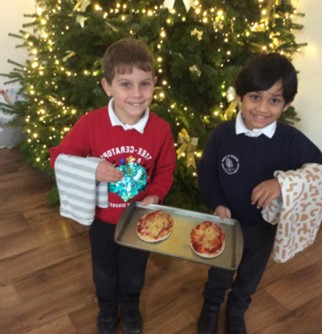 it be in simple ways such as the clothes we choose to wear, the way we decorate our homes or the social groups outside of the home we like to gravitate to. The most expressive amongst us may like to participate in arts or crafts or the wider arts. Even if we don’t feel confident enough express ourselves to others or even ourselves we all appreciate the expressive arts, listening to music, going to festivals, visiting galleries, appreciating street art or getting into the latest boxset. We are all drawn to the arts in some way on an almost daily basis and we all intrinsically understand how beneficial they can be to our well-being as they often give us a direct route to our emotions, uplifting us, relaxing us and energising us and providing us with inner peace and comfort and even euphoria! What a terrible place school would be if we didn’t respond to this basic human need.
How we build children’s character
Project based learning was a staple of school curriculums for many years. Teachers would make links between a topic such as ‘castles’ and link all of the learning in class to it; writing about the history of castles, building castles out of junk modelling materials and finding castles in the UK on a map. This had its merits but often meant learning was left to chance and never revisited to promote remembering.
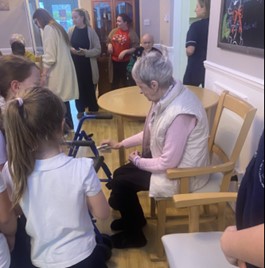
We have taken a different approach to project based learning. We believe in ‘Positive Projects’. We ask each year group to plan two positive projects each year. During these projects children learn the importance of empathising with others. One of these we hope is a fundraiser for a worthy cause that may be local or further afield, the other, effort based that supports others in a non-monetary way. We hope that our projects engender in our children the worthiness of helping others 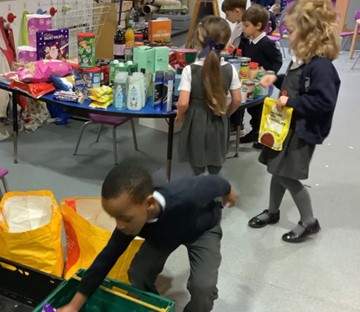 and contributing to the collective good. We hope the sense of pride and achievement develops our children’s characters and helps them to understand how there is always someone that needs the help and support of others. Our Positive Projects have real outcomes in the real world. By challenging ourselves to interact and seek out others to support do we build true character. Our aim for these projects is that children gain tangible experience of making the world a better place for others. In turn, the projects will make the children better participants in our world and ultimately improve their own characters.
We have recently launched our ‘Thirty things to do..’ initiative. Within each year group we have created a list of thirty suggestions that families can do with their child that embraces the outdoors, encourages exercise, creates community cohesion, develops appreciation, grows inquisitiveness, balances out our desires to over-interact with technology and gives opportunity to celebrate and share all of these.
Assessing our wider curriculum to support learning
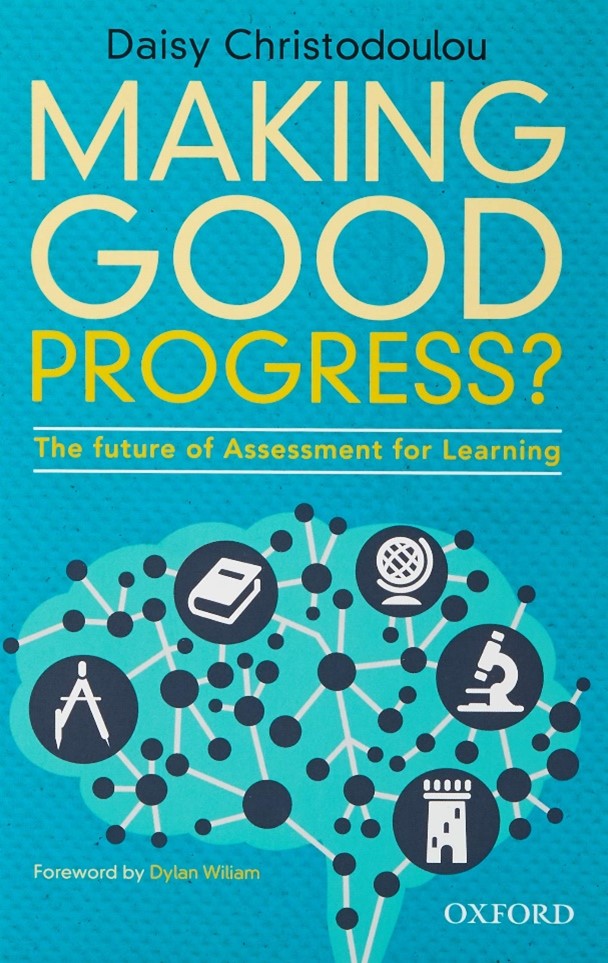 In all schools there has been a long tradition of robust assessment in English and maths. This has provided teachers with valuable information regarding what children understand, what they have forgotten and what they need to learn next. This can be a time-consuming task and sometimes demanding on classroom time and children’s emotions. With regards to assessing the subjects in our 3D curriculum we have struck a careful balance between what is achievable in the precious time we have available to class teachers and what is useful for learning and teaching. In light of this we have drawn heavily on the work of Daisy Christodoulou and her research relating to assessment for learning.
We have focussed our recent curriculum assessment development in the foundation subjects on leaders developing assessment so that they know whether pupils are learning the intended curriculum well and that our leaders have all the information they need to improve learning effectively.
In history, geography and science we use our formalised, low-stakes quizzing approach to assess the learning taking place in these subjects. Subject leaders collate average raw scores for quizzes at the end of each unit of learning for each class across a year group and across the school. From this leaders have a valuable insight and a broad overview of how well children are learning the curriculum from which they can make astute decisions about how the curriculum can be developed to improve teaching and learning further.
We are proud of our school curriculum and the time that we put into matching it to the needs of our children and their community.
Click on the links below to take you to our curriculum pages and programmes of study.